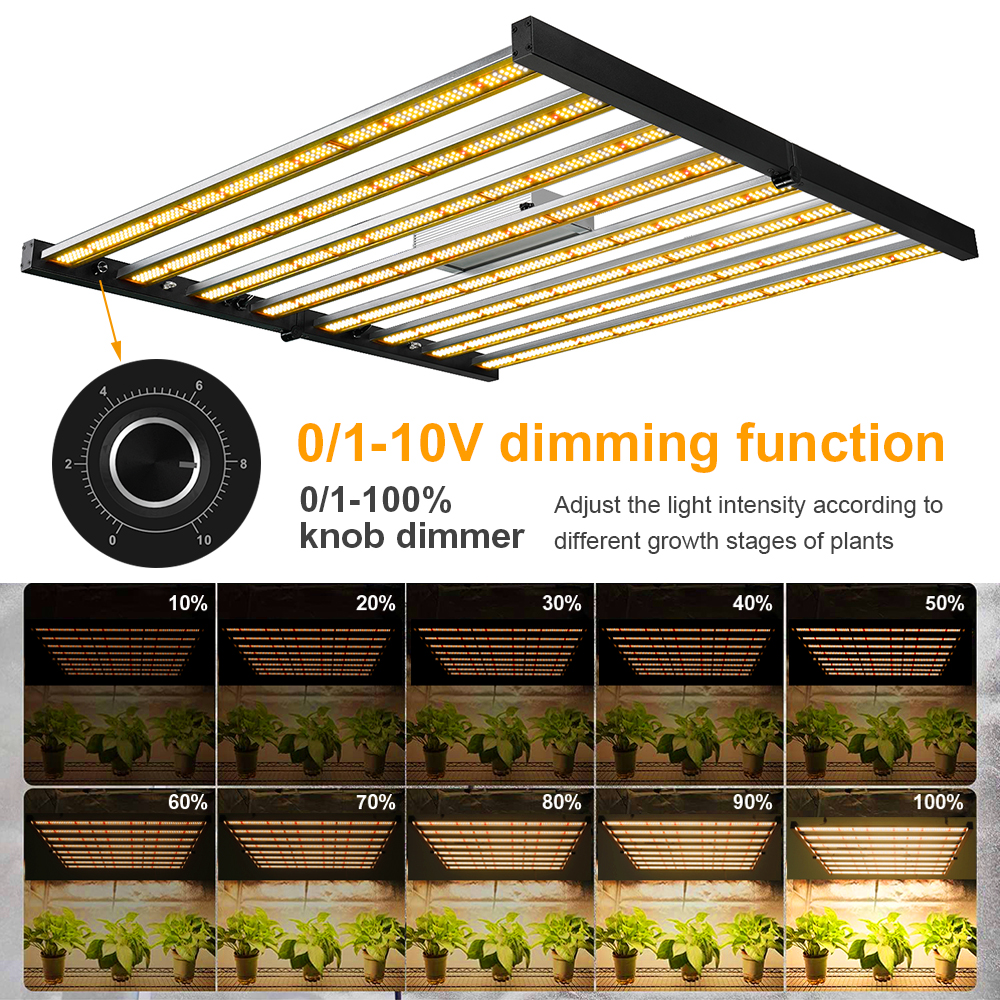
LED plant lights provide photosynthesis for plants, promote plant growth, reduce the time it takes for plants to blossom and bear fruit, and improve production. In modern agriculture, LED plant growth lights are indispensable products for crops.
Explanation of LED characteristics
As a new lighting source, LED has many characteristics different from other electric light sources, which also makes it the first choice for energy saving and environmental protection light source.
LED used in the field of plant cultivation also has the following characteristics:
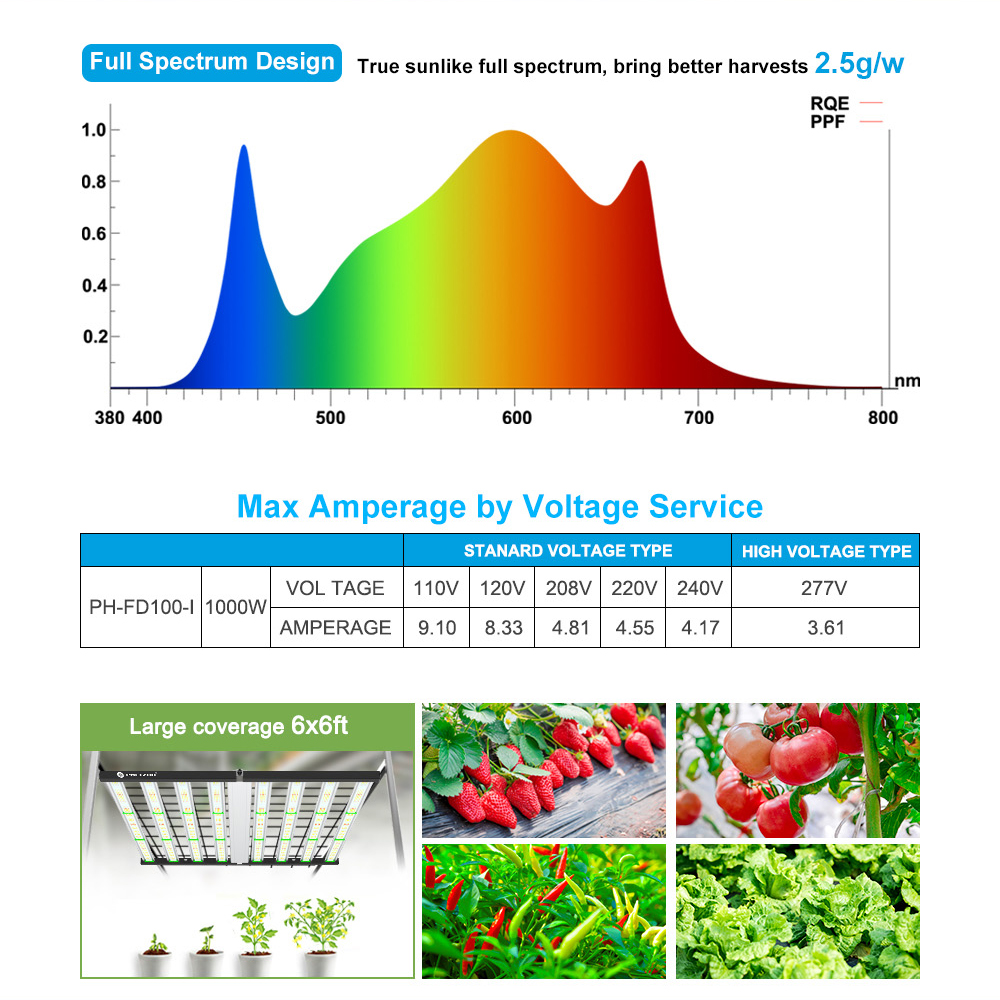
Spectrum customization can be carried out according to different cultivated crops. By changing the photoperiod and LED spectrum, it can regulate the nutrition of vegetables and flowers, accumulate fruit expansion and prolong the flowering period. Secondly, the photosynthetic rate of plants can also be changed by adjusting the light quantum flux density of LED lamp μmol/m2·s, so as to control its growth rate and improve crop quality and yield.
In addition, LED lights with specific spectral ranges, such as infrared and UV, can also play a role in regulating the nutritional enrichment and disease of crops and other special plant physiological characteristics.
In addition to being used as a supplementary illumination for plant photosynthesis when the amount of sunlight is small or the duration of sunlight is short, it can also be used as plant induced illumination.
The study showed that the growth rate and photosynthetic rate of lettuce increased by more than 20% when LED lighting was used.